✕
Skip to main content
Category

Programs

Image

Derek Stein

By WFD Profile

Image

Image

Now Enrolling: Get Paid to Build Your Future in the Building Trades

By Programs

Rivers of Steel is now enrolling for its Workforce Training Program in Historic Preservation and Building Trades, a paid, hands-on opportunity designed for individuals ready to build real skills while preserving one of southwestern Pennsylvania’s most iconic historic sites.

Set at the legendary Carrie Blast Furnaces National Historic Landmark, this Pre-Apprenticeship program offers participants a foundation for careers in the construction, manufacturing, and historic restoration industries—all while earning money and gaining industry-recognized credentials.

Learn by doing on a Historic Worksite

This intensive emphasizes hands-on learning from day one. Participants actively practice them through real-world restoration projects that help preserve our industrial heritage and improve public access to historic spaces.

Trainees receive a mix of:

  • Related-theory instruction
  • Skill-building training modules
  • On-site, practical experience

Working in an active historic preservation environment allows participants to see how multiple trades connect and collaborate—a critical insight for anyone considering a long-term career in the building trades.

Explore Multiple Trades, Discover Your Path

The program is intentionally designed to expose participants to a variety of trade disciplines, helping them make informed decisions about their future. Subjects covered include:

  • Safety
  • Welding & Fabrication
  • Electricity and Circuits
  • Equipment Operation
  • Rigging and Signaling
  • Concrete

By building a broad technical foundation, participants gain both confidence and clarity about which trade best aligns with their skills and interests.

Earn Industry-Recognized Certifications

Graduates of the program leave with valuable credentials that make them competitive in today’s workforce. Certifications available include:

  • OSHA-30
  • AWS D1.1
  • Qualified Forklift Training
  • Qualified Rigger/Signal Person

These certifications are widely recognized across construction, manufacturing, and restoration industries and can open doors to apprenticeship programs and long-term employment.

Connections That Lead to Careers

Rivers of Steel is committed to workforce development that responds to real regional needs. Through partnerships with local industry leaders, the program aims to connect participants with employers and apprenticeship opportunities upon completion.

This focus on industry placement ensures that training is practical, relevant, and aligned with current demand in the building trades.

Who Should Apply?

Individuals ages 18–26 are strongly encouraged to apply for the June 2026 cohort. This program is ideal for those who:

  • Prefer hands-on work
  • Are interested in construction, manufacturing, or restoration
  • Want to earn while they learn
  • Are looking for a clear pathway into the building trades

No prior experience is required—just a commitment to learning and teamwork.

To apply, email Derek Stein at dstein@riversofsteel.com

About Rivers of Steel

Rivers of Steel is a regional nonprofit that celebrates the artistry, innovation, and labor that shaped southwestern Pennsylvania. Through historic attractions, workshops, exhibitions, tours, festivals, and workforce development programs, Rivers of Steel connects past and present while investing in the future of skilled trades.

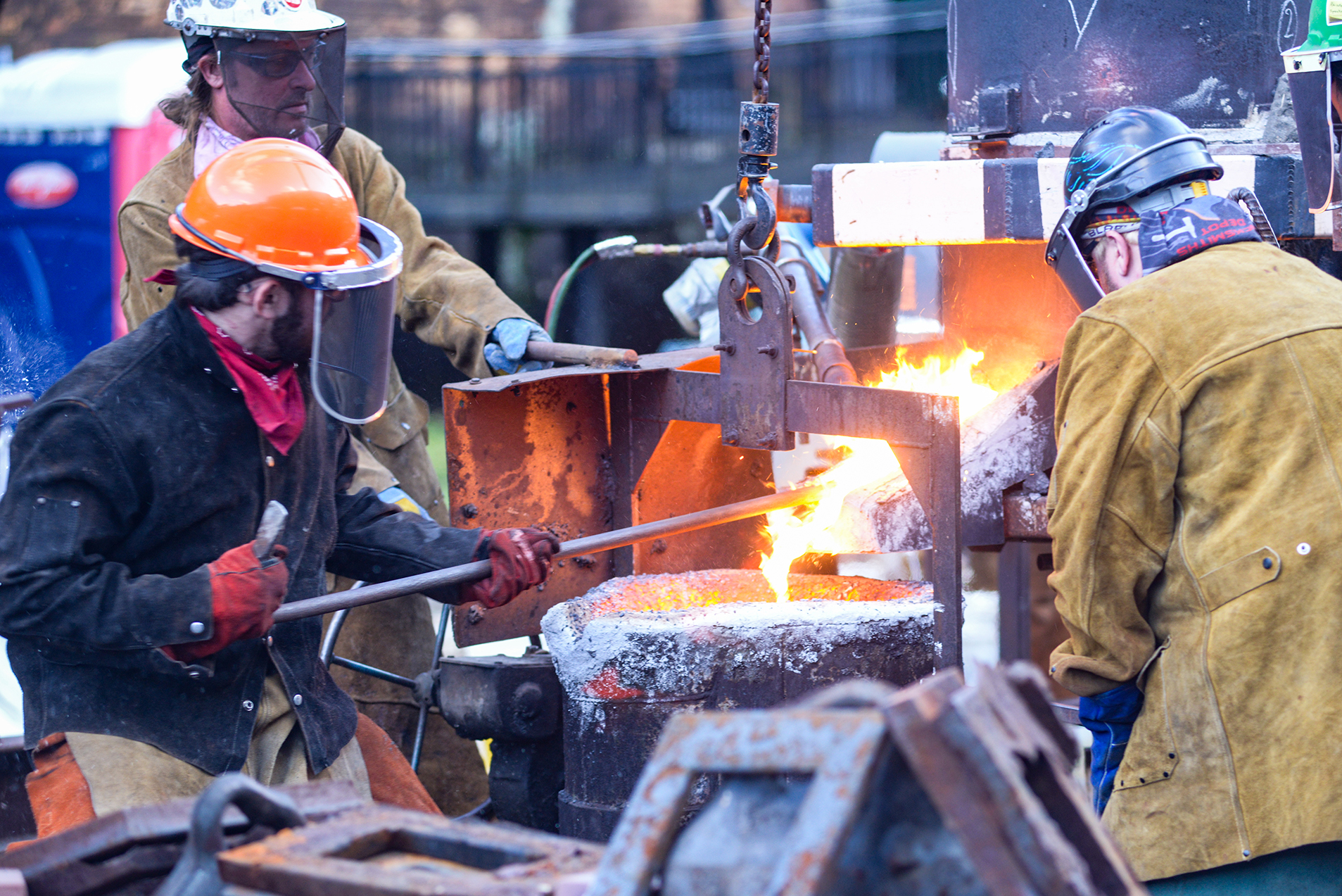
Three metal workers in leather protective gear pour molten aluminum into a mold.

Join the Rivers of Steel Metal Arts Team: Metal Arts Apprentice

By Blog, Newsletters, Press Room, Programs

Rivers of Steel Heritage Corporation—managers of the Rivers of Steel National Heritage Area—is seeking a Temporary, Part-Time Metal Arts Apprentice to support our dynamic and hands-on Metal Arts program. This is an exciting opportunity for someone with metal shop experience who enjoys working with the public and contributing to creative, educational programming rooted in the region’s industrial legacy.

This position runs March through October 2026, with the potential for extension.


METAL ARTS APPRENTICE

Temporary Part-Time

Rivers of Steel Heritage Corporation, managers of the Rivers of Steel National Heritage Area, is seeking a part-time apprentice in its Metal Arts program.

POSITION DESCRIPTION

Reporting to the Metal Arts Coordinator/Furnace Master and Metal Arts Technician, the Metal Arts Apprentice will work closely with Rivers of Steel’s staff and contractors to support the day-to-day operations of the metal arts program, including shop maintenance and cleanliness, technical and events-related duties, support public and private workshops, demonstrations, and other duties as required. This temporary part-time position is from March through October 2026 with potential for extension.

Primary Duties:

  • Facilitate receptive services tours, educational workshops and team-building activities
  • Oversee Metal Arts retail product inventory
  • Monitor and maintain metal arts equipment including cupola furnaces and mobile foundry
  • Organize and maintain the cleanliness of the mold and pattern workshop and related program areas
  • Support public and private workshops, demonstrations, special events, corporate events, and team-building experiences
  • Work collaboratively with staff from other departments as appropriate
  • Attend programs and events sponsored by Rivers of Steel and/or other organizations or entities as needed
  • Perform other duties and responsibilities as required

Qualifications & Requirements

Qualified candidates will possess the following attributes:

  • Strong working experience with metal fabrication techniques and metal shop protocols
  • Technical understanding of various mold making and sculptural techniques
  • Demonstrated ability to work with the public and appropriately represent Rivers of Steel’s programs
  • Excellent interpersonal, communication, time management and organizational skills
  • Demonstrated ability to prioritize and achieve objectives efficiently
  • Experience working with stakeholders from diverse sectors and backgrounds.
  • Enthusiasm for Rivers of Steel's mission; demonstrated passion for arts and culture, history, community engagement, and tourism
  • As an ambassador of Rivers of Steel, applicants are expected to enjoy working with the public and develop an evolving knowledge of the organization’s and the region’s cultural assets

Physical Demands and Work Schedule

  • Candidates must possess a valid Pennsylvania driver’s license, and have a reliable vehicle available for work use
  • Must clear all applicable Commonwealth of Pennsylvania background checks, including Pennsylvania State Police, Pennsylvania Child Abuse History, and FBI fingerprinting
  • Ability to undertake some physical activity and work including light lifting
  • Availability to work weekdays and occasional evenings, weekends and holidays. Please refer to Rivers of Steel’s Employee Handbook for official policies.

Position Compensation & Details

  • This is a temporary part-time position. Hours will not exceed 30 hours per week with accruable paid sick leave. No additional benefits are included with this position.
  • Compensation is $20-$28/hour and commensurate with experience.
  • The Metal Arts Apprentice will be based at the Carrie Blast Furnaces National Historic Landmark.

About the Metal Arts Program

Inspired by the legacy of iron-making at the Carrie Blast Furnaces, Rivers of Steel’s Metal Arts program offers educational workshops, public demonstrations, and team-building experiences highlighting foundry work and blacksmithing. Our educational workshops offer a range of hands-on opportunities for both youth and adults to get involved at the novice, intermediate, and experienced skill levels. Participants work hand in hand alongside fellow attendees, Rivers of Steel staff, and visiting artists from across the country.

About Rivers of Steel

Founded on the principles of heritage development, community partnership, and a reverence for the region’s natural and shared resources, Rivers of Steel strengthens the economic and cultural fabric of western Pennsylvania by fostering dynamic initiatives and transformative experiences.  Rivers of Steel showcases the artistry and innovation of our region’s industrial and cultural heritage through its historical and 21st-century attractions—offering unique experiences via tours, workshops, exhibitions, festivals, and more. Behind the scenes, Rivers of Steel supports economic revitalization, working at the grassroots level to deepen community partnerships, promote heritage tourism, and preserve local recreational and cultural resources for future generations.

Application Process

Please provide a detailed resume and cover letter delineating your relevant experience to employment@riversofsteel.com. Applications will be accepted until the position is filled. Only applicants most closely qualified for the position will be contacted for an interview.

Rivers of Steel is an equal opportunity employer and does not discriminate in hiring, transferring, promoting, terminating, paying, training, benefits, or other actions affecting employees. Rivers of Steel does not make any personnel decisions based on race, color, sex, age, national origin, religion, ancestry, marital status, veteran’s status, non-job related disability or handicap, or other prohibited criteria.

A flame performer in front of a crowd with Carrie in the background.

Iron, Fire, and Creativity Collide at the Festival of Combustion 2025

By Blog, Programs

There’s nothing quite like standing in front of a furnace as molten iron pours out in a river of fire. The roar, the sparks, the heat—it’s a spectacle that you’ll feel in your bones. 

On Saturday, October 4, from 3:00 to 9:00 p.m., the Carrie Blast Furnaces will come alive with that unforgettable energy at the Festival of Combustion 2025, presented by United States Steel.

Now in its ninth year, the Festival of Combustion has become one of the region’s most exciting fall traditions—a daylong celebration of industrial arts, American craft, and the communities that keep those traditions alive.

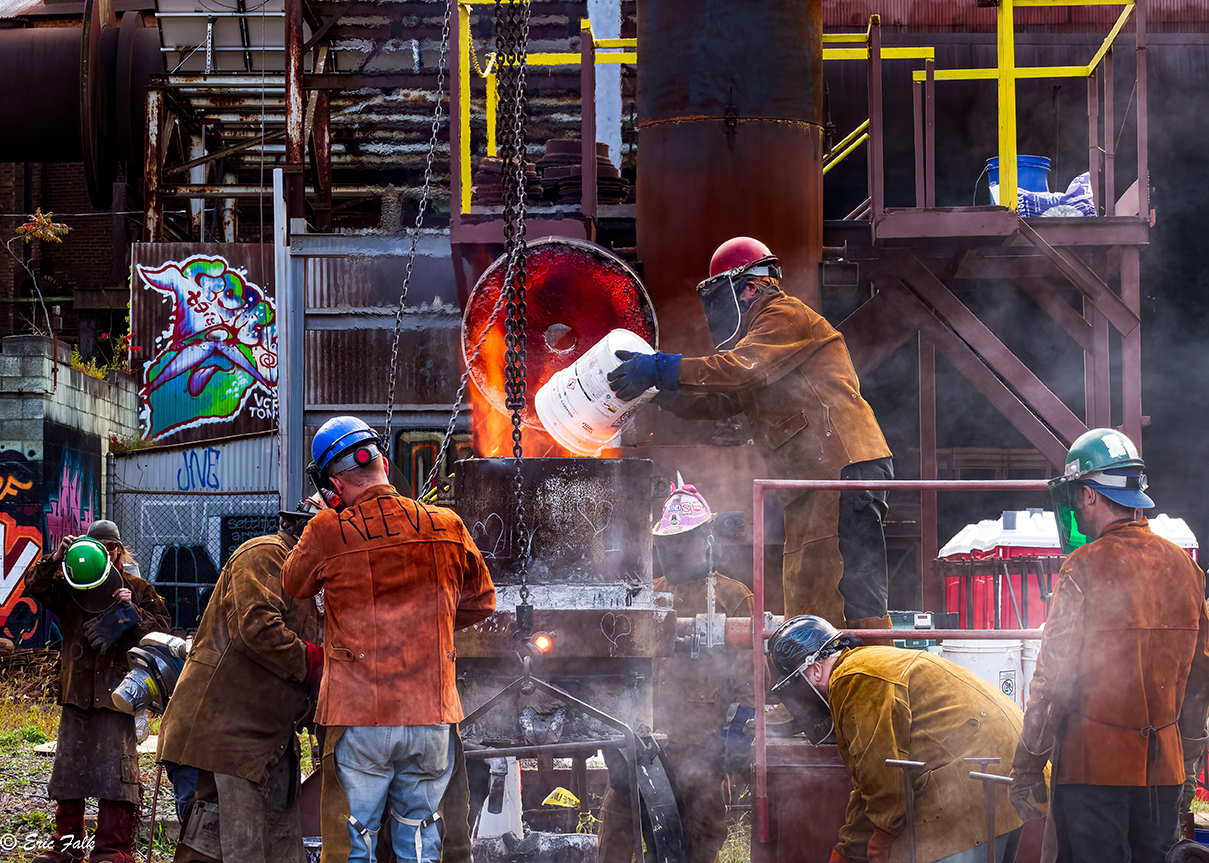
Three workers tending to the fire for an Iron Pour at the the Festival of Combustion.

The Iron Pour: The Heart of the Festival

If you’ve never seen an iron pour before, this is the year. Rivers of Steel’s metal arts team will fire up the furnaces throughout the day, streaming molten iron into molds while festival-goers look on. Even better, you can carve your own scratch mold and watch as it transforms into an aluminum keepsake. As evening falls, the furnaces glow in a dramatic iron pour performance that lights up the site in flame, sound, and color.

“The iron pour is both a nod to Pittsburgh’s past and a dramatic work of art in the present—an awe-inspiring experience that connects history, creativity, and community in a way that only Carrie can,” says Chris McGinnis, Vice President of Programs and Development at Rivers of Steel.

Workers at Carrie Furnaces prepare for the Iron Pour at the Festival of Combustion.What You’ll Find Beyond the Flames

The festival is about the creativity that thrives in southwestern Pennsylvania today. Throughout the day you can:

  • Try hands-on workshops like raku ceramics, mosaics, “Space Metal” aluminum scratch molds, penny pendants, graffiti art, and more.
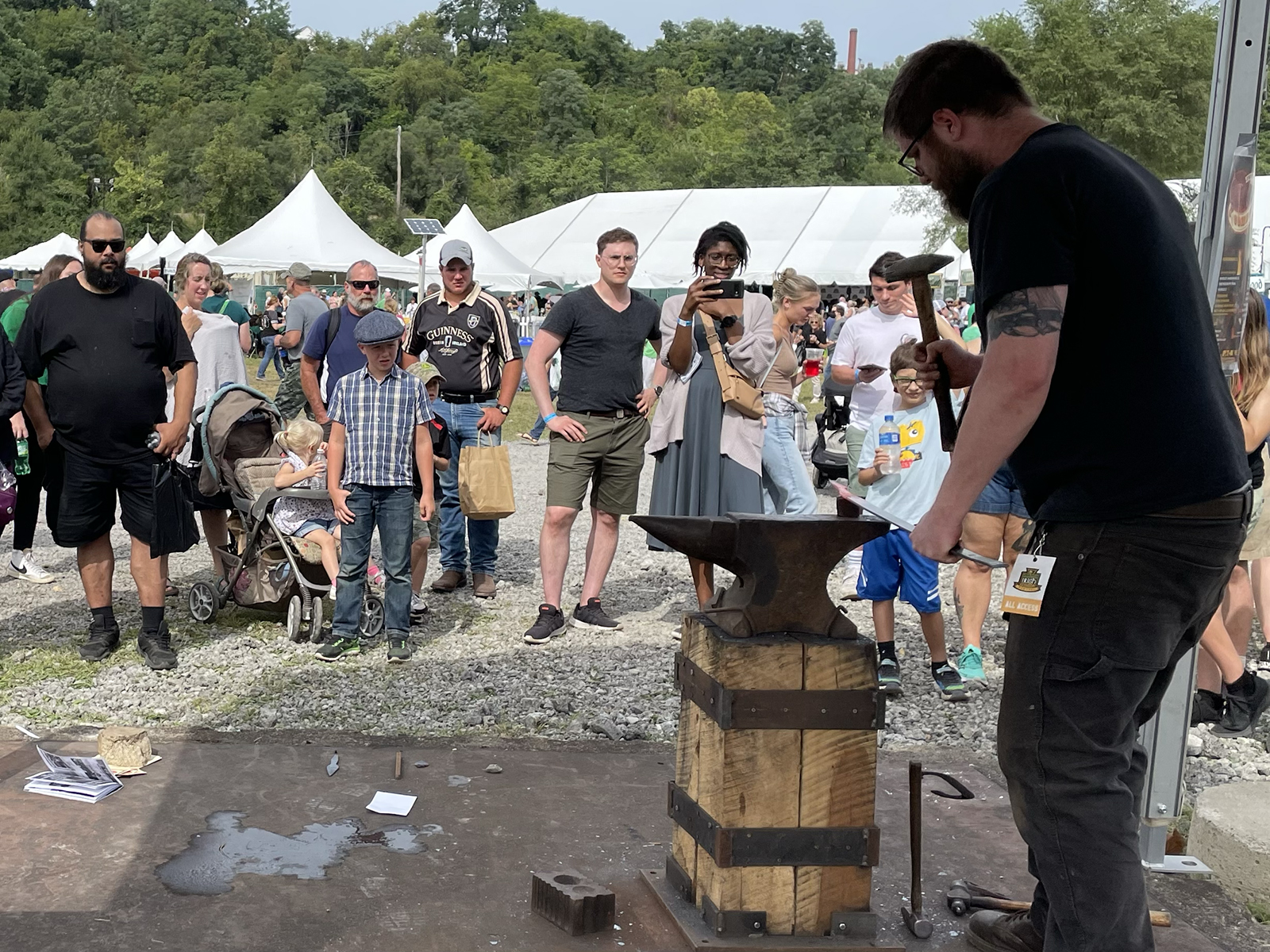
  • Watch live industrial arts demonstrations, including hot riveting (new this year!), power hammer forging, blacksmithing, welding, and glassblowing.
  • Explore the Heritage Craft Tent, where you’ll find blacksmiths at work, rye whiskey tastings, historic games for kids, and cultural heritage organizations sharing their stories.
  • Catch live performances all day long: The Polkamaniacs, Erika June and the Tunes, DJ Zombo’s Record Party, flame dancers, and graffiti and tattoo artists.
  • Refuel with craft beer from Oskar Blues, Straub, and Cigar City, plus some of Pittsburgh’s best food trucks.

And of course, the night ends with a bang—a fireworks finale over the Carrie Furnaces, thanks to B&D Fireworks.

A blacksmithing demonstration taking place at the Festival of Combustion. A First Festival for Rivers of Steel’s New CEO

For Rivers of Steel’s new president and CEO, Mary Murrin, this will be her first Festival of Combustion.

“I’m excited to see firsthand how this festival brings people together around Pittsburgh’s heritage and creative spirit,” she says. “Events like this showcase the value these historic sites bring to our region—not only as touchstones of the past, but as vital spaces for culture, innovation, and community today.”

Plan Your Visit

  • Date: Saturday, October 4, 2025
  • Time: 3:00–9:00 p.m.
  • Location: Carrie Furnaces, 801 Carrie Furnace Blvd., Pittsburgh, PA 15218
  • Tickets: $25 in advance; free for ages under 18 at FestivalOfCombustion.com
  • Parking: Free, on-site

Admission includes all workshops, demos, and marketplace access. Self-guided tours of the landmark grounds are also available until 7 p.m.

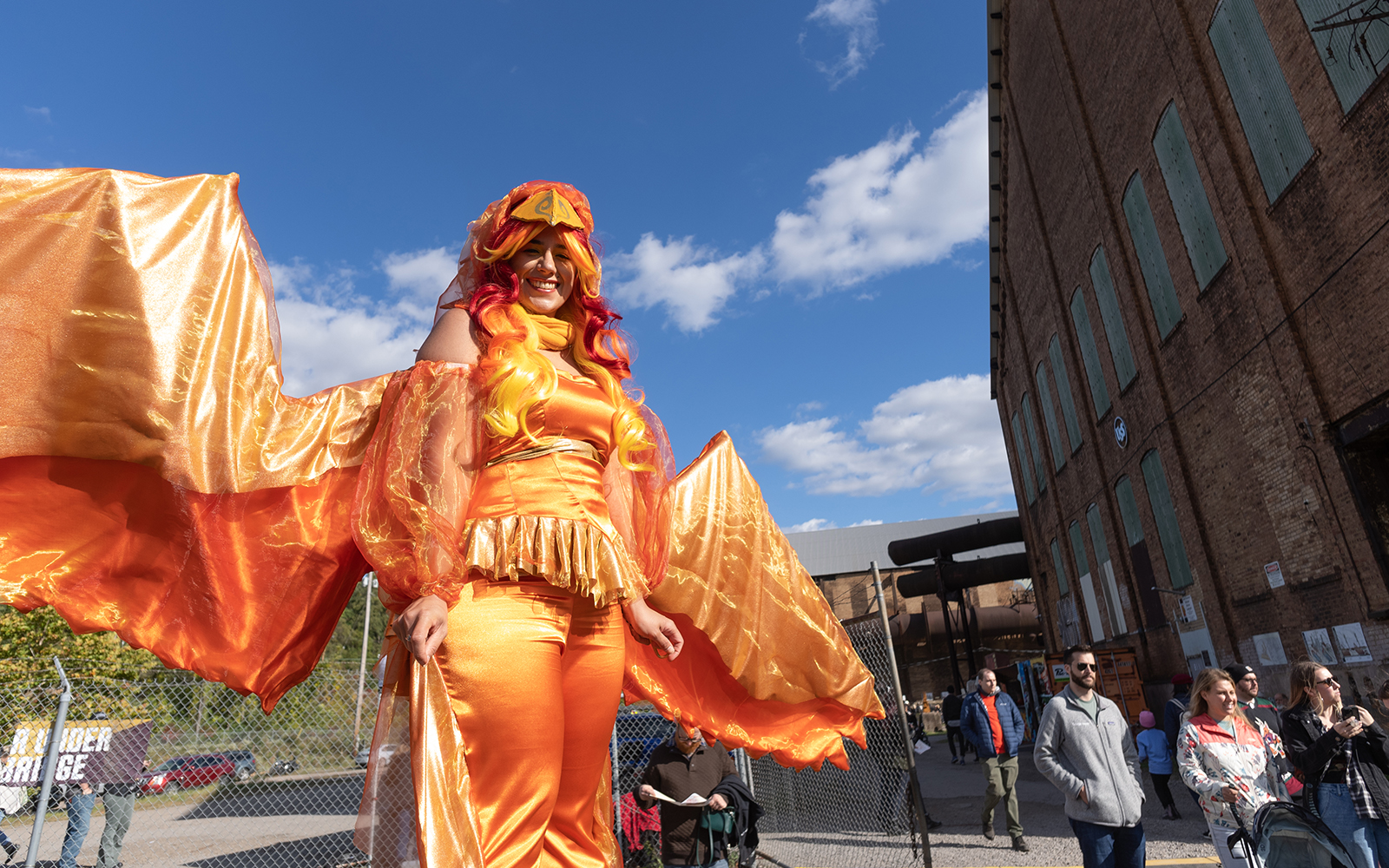
A woman dressed in an orange phoenix costume stands in the foreground of the Festival of Combustion at Carrie Furnaces.The Festival of Combustion 2025 is made possible thanks to our sponsors: United States Steel, Peoples Natural Gas, NEXTpittsburgh, Butler Gas Products, Chiz Bros, Jackson Welding Supply, and UPMC Health Plan.

Image

two girls in google hold water dropper and sample

Rivers of Steel Receives Support from the Alcoa Foundation for Full STEAM Ahead Programming

By Press Room, Programs

Rivers of Steel is proud to announce that we have been awarded a grant from the Alcoa Foundation in support of our Full STEAM Ahead educational initiative. This funding will help expand hands-on learning opportunities for students across our region, fostering both environmental awareness and creative problem-solving skills.

At its core, Full STEAM Ahead introduces K–12 learners to the complex intersections of industry, innovation, environment, and economics. Through interactive curriculum, students come to understand that cities are more than centers of commerce, they are living ecosystems. The program encourages young people to think critically about urban environments, while exploring ways to balance development, ecology, and community well-being.

The historic Carrie Blast Furnaces National Historic Landmark provides a powerful setting for this work. The site includes rare riverfront access along the Monongahela, featuring the last remaining natural river beach within Pittsburgh’s pool system. Its presence offers important context for students as they consider the long-term impact of industrialization on local waterways and ecosystems. This unique landscape connects the environmental, cultural, and historical lessons of the program in a way few sites can.

Thanks to the Alcoa Foundation’s support, Rivers of Steel can continue to build connections between the arts, environmental sciences, and history, while also opening pathways to the trades. Aluminum casting and forging activities, for example, introduce students to traditional foundry work and its relevance to today’s economy. These projects highlight meaningful career options while sparking creativity and curiosity. To further these opportunities, representatives from Rivers of Steel’s adult workforce training programs also meet with older students, sharing information about paid training opportunities in the traditional trades.

By blending education, creativity, and career exploration, Full STEAM Ahead empowers students to better understand their communities, their environment, and their own future possibilities.

Rivers of Steel extends its sincere gratitude to the Alcoa Foundation for this generous support. Their partnership makes it possible for us to provide innovative programming that inspires the next generation while preserving and activating one of the region’s most important historic landmarks.

Shoreline of the Carrie Blast Furances

Industry Meets Inquiry: Students Explore the Eco Revolution Happening at the Carrie Furnaces

By Newsletters, Programs

Glimpses of the inspirational force that is Mother Nature can be found throughout the Carrie Blast Furnaces historical site, noting the transition from manmade infrastructure to the reclamation of nature and a nod to the cycle of life and death. Many have paid homage to this cycle, most notably being The Carrie Deer created by the Industrial Arts Co-op, made up of artists George Davis, Liz Hammond, Tim Kaulen, John Latell, Joe Small, Tim Yohman, and Bob Ziller. Today, the former Steel industry structure and worksite houses the only non-operative blast furnaces in the region and is now a habitat for wildlife, including red-tailed hawks, ravens, great horned owls, and more. This combination makes for an interesting venue for environmental science classes and history buffs alike.

This past year, Rivers of Steel educators have been bringing students in grades 5-11 to the Carrie Blast Furnaces to explore this eco revolution in a new class, Environmental Science on the Mon. This program features familiar elements from Rivers of Steel’s science classes on The Explorer Riverboat, offering unique alternatives while the Riverboat receives much-needed repairs.

“What excites me about this program is the historical tour of the site, combined with access to conduct hands-on environmental testing in a location that was formerly impacted by the very industry that made this region prosperous and famous. This type of legacy pollution exists throughout Rust Belt cities and is part of the story of iron and steel just as much as the revered stories of Pittsburgh and American steel building the world,” says Suzi Bloom, Director of Education at Rivers of Steel National Heritage Area. “The reality is that the peak of the steel industry happened before most environmental regulations were put in place, a concept that can be difficult for younger students to fathom.“

Historic Pump House Rivers of Steel

The AC Powerhouse

The focal point of the hands-on sampling in Environmental Science on the Mon is, of course, the adjacent Monongahela River, which has a profound history of waste contamination from sewage, industry, and acid mine drainage. The Monongahela River watershed is also home to many former slag dumping sites, another contributor to the legacy pollution, so often found in iron and steel towns. People have tracked the effects of industrial contamination for more than a century. In Homestead: The Households of a Mill Town (part of the Pittsburgh Survey, 1907), Margaret Byington notes that the water supply in Homestead comes from the Monongahela. “The water, some of which drains from the mines, has been used over and over for the processes of steel and coke manufacture, and is impregnated with chemicals, especially sulphuric acid.” According to a Homestead resident in 1907, “No respectable microbe would live in it.” Biological records support this claim indicating that most of the upper Monongahela River remained lifeless until well into the 1960s.

The A.C. Powerhouse (i.e., Alternating Current Power House) at The Carrie Blast Furnaces serves as the classroom space for Environmental Science on the Mon, with the building itself being part of the environmental story of the site. Initially built in 1906-1907 to generate electrical power for the U.S. Steel Homestead Works plant and the Carrie Furnaces facility, its construction was part of a company-wide effort for U.S. Steel to centralize electrical power generation among its plants in the Pittsburgh District. The company was a leader in the country in the utilization of blast furnace gas to blow the blast furnaces engines and to power electrical generators. At the height of their production, Carrie Furnaces 6 and 7 produced about 250 million cubic feet of gas per day with the potential to generate large quantities of power, producing between 2,000 and 2,500 tons of hot metal per day per furnace. By 1912, the Carrie Furnaces plant produced nearly 1 million tons of iron annually and was capable of generating 15,200 kilowatts of power for the U.S. Steel Homestead Steel Works.

During Environmental Science on the Mon, students collect data on dissolved oxygen, turbidity, pH, and temperature—all tests indicative of whether the river can support the life typical of a healthy freshwater ecosystem. Students test for nitrates and iron in this hands-on experience, utilizing digital meters and field test kits, and gain experience with sampling equipment. Students explore the concepts of watersheds while referencing topographic maps of the Monongahela River from 1956 and 2019, which show the drastic change and reduction of industry along the riparian zone within the last 65+ years. Today the Monongahela River is still a regional source of drinking water with healthy freshwater ecosystems providing opportunities for recreation, such as fishing and boating.

Iron Garden at Rivers of Steel

Iron Garden Tour

Rivers of Steel’s educators often collaborate with teachers to custom tailor the program experience like this summer’s Pre-College program in Computational Biology hosted through Carnegie Mellon University where students collected soil samples at the blast furnace site to later process in the laboratories at Carnegie Mellon. Carnegie Mellon University Professor, Phillip Compeau shares, “We run an immersive full-time program for students from Pittsburgh and across the country to spend four weeks analyzing the microbes in Pittsburgh soil and water environments and determining how these microbial communities change over time. Rivers of Steel has proved an integral partner as we have grown the program from 25 students in 2019 to 100 students in 2025.” Sampling soil from the Carrie Furnace site identifies how industrial activities have influenced the soil’s microbial communities. This site offers our students, many of whom are from outside western Pennsylvania, a truly unique opportunity to learn about a fascinating era of western Pennsylvania history and the iron-making process while also performing scientific research.

Over time Environmental Science on the Mon programs plan to evolve with the addition of science modules including birdwatching and plant studies in the Iron Garden at Carrie Blast Furnaces. Designed in collaboration with landscape architect Rick Darke, Penn State Master Gardeners, Addy Smith-Reiman, and CMU staff sculptor Josh Reiman, the garden features a stunning reveal of Carrie Blast Furnaces through Pennsylvania native plants. This park space once again highlights natures reclamation of the site, iron cast placards are posted up throughout the garden for a self guided experience annotating the ecological biodiversity. Rivers of Steel is proud to host the region’s postindustrial history with the wild garden being a big part of this story. The Iron Garden has become recognized as one of the region’s botanical assets and is part of the Pittsburgh Garden Trail highlighting hidden gems since 2017.

For more information on Rivers of Steel’s student programs contact Suzi Bloom, Director of Education at education@riversofsteel.com.

Rivers of Steel environmental education programs are made possible by the Arconic Foundation, The Alcoa Foundation, and The Grable Foundation.


ROS Membership CTA
Image

Traditional Trades Workforce Development Program

By Blog, Getting to Know, Historic Preservation, Partners for Creative Economy, Programs

Trainees Kiersten Lapen and Nathan Swiech pictured with Ron Baraff, Director of Historic Resources and Facilities

First Cohort in the Traditional Trades Workforce Development Program Begins

Rivers of Steel is proud to announce the launch of its first cohort in the Traditional Trades Workforce Development Program, designed to train and empower individuals seeking careers in fields such as welding, carpentry, and masonry. This program is the first of its kind to be launched as a paid training opportunity, set against the backdrop of the historic Carrie Furnaces. With a robust curriculum focusing on essential skills in welding, carpentry, and masonry—framed within the tenets of historic restoration and preservation—participants will attain industry-recognized certifications that uniquely position them for entry into the workforce, trade union membership, or continued education in the trades.

Last spring, we introduced this new vision for workforce development as a pillar of the Partners for Creative Economy initiative to unite, uplift, and empower communities throughout the Rivers of Steel National Heritage Area. Evolving out of a workforce training pilot that focused on the restoration of the 48-Inch Universal Plate Mill, Rivers of Steel welcomed its first official cohort at the start of May 2025.

The inaugural cohort welcomes two enthusiastic trainees, Kiersten Lapen and Nathan Swiech. Lapen came to the cohort after graduating from the Introduction to Construction Trades Program at the Pittsburgh Gateways Corporation. Following that program, she worked in the plasterers union but wanted to pursue additional training in a variety of trades. The opportunity to gain experience across multiple trades made the program particularly appealing. When asked about her involvement in the program, Lapen said, “I’m so excited to be involved in a piece of history as impactful as Carrie Furnaces. To have the opportunity to learn the trades, be exposed to labor history, to connect with individuals with diverse backgrounds—from metalworking to machinery to the archives at Rivers of Steel—it all amounts to a uniquely well-rounded and fascinating program. I’m proud to be a part of it!“

Nathan Swiech comes to the program after working for over thirteen years in the culinary industry as a cook. While he enjoyed his time in the kitchen, he was eager to find another career path. His love of history, particularly local history, made this opportunity even more exciting for him. When asked what he likes most about the program, Nathan said, “Growing up I was always told, remember where you come from, and this program gives me the opportunity to preserve where I come from—I’m not going to lie, it’s kind of magical! The second you step onto the grounds at Carrie Furnaces, you can feel the souls of the people who were there and the legacy they left.”

Image

Trainees Lapen and Swiech begin shop preparations ahead of their work on 48 inch Universal Plate Mill and technical skills modules.

Over the coming months, participants in the program will work alongside Rivers of Steel staff to execute projects in multiple trades, positioning them for work as millwrights, welders, masons, and carpenters. Participants will have the opportunity to complete NIMS certifications, welding D1.1 certification, OSHA safety certifications, and NCCER certifications in carpentry. Additionally, they will participate in concrete projects, machining projects, and small motor repair to aid in artifact restoration and preservation. Skillset development and related certifications create opportunities for work in historic restoration and regional industry.

In a time of computers, robotics, and technology, it may be pondered: why historic trades? Historic trades education covers a vast array of skills including those broadly recognized as essential to the field such as tool mastery, measuring systems, craftsmanship techniques, and material knowledge. However, a career in the historic trades also requires ingenuity, problem solving, and adaptability. Working with irregular materials or creating parts that are no longer manufactured requires professional agility—a skill transferable to any industry. Understanding the roots of how things were made previously often inspires innovation, such as historic joinery techniques that influence modern design and sustainable architecture.

Image

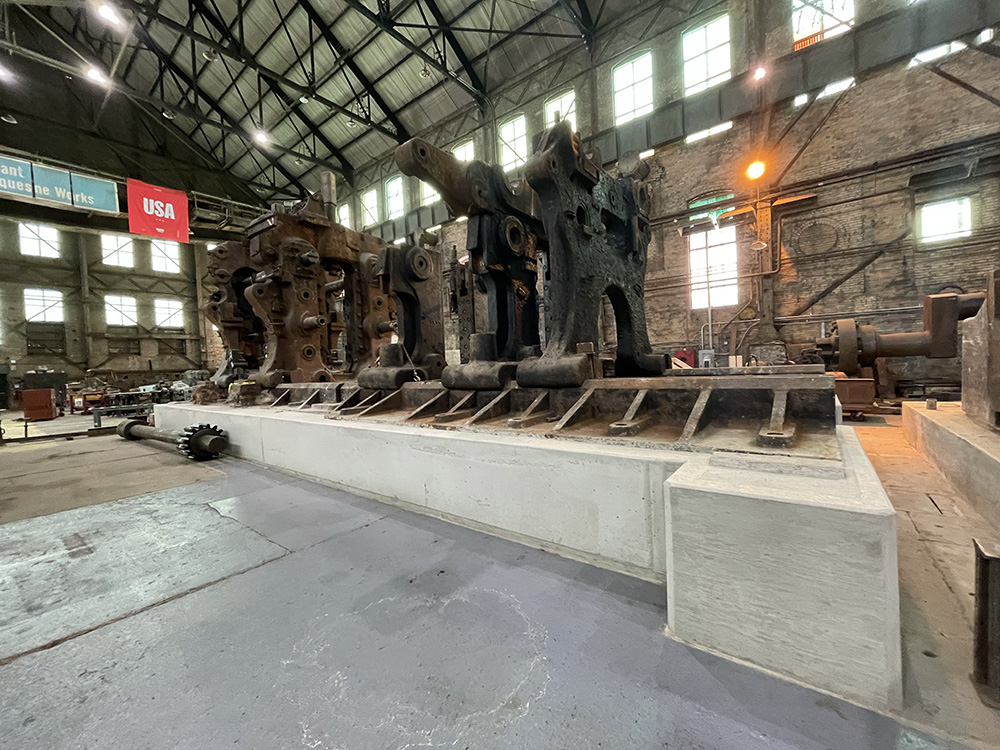
Progress continues on the restoration of the 48 inch Universal Plate Mill following completion of the concrete footers during the winter of 2025. Workforce trainees will support the project team during final assembly and fabrication of the mill’s components.

A pilot program in the summer of 2023, funded by the Department of Conservation and Natural Resources, allowed Rivers of Steel to train two apprentices, Malayna Arambula and Derek Stein, to begin learning about the work of historic preservation from the ground up. This pilot laid the initial groundwork for the workforce development program that exists today and offered these trainees the chance to get their hands dirty helping to restore the 48-Inch Universal Plate Mill, identified by the Smithsonian Institution as the last mill of its kind in the world. Arambula and Stein developed an array of new skills in the trades while preparing the mill for reassembly as the centerpiece for the Rivers of Steel Visitors Center at Carrie Furnaces. Coming full circle, both Arambula and Stein have since joined Rivers of Steel as full-time staff, bringing the experience learned during the pilot phase of the workforce program to support the future of the organization.

Derek Stein is now one of Rivers of Steel’s newest employees, joining the organization in April 2024 as the organization’s first Workforce Instructor. Beginning his career as a welder, Derek started work in custom fabrication and historic restoration before becoming an instructor in multiple subject areas including mathematics, English, and, of course, historic trades. Additionally, he is currently completing a four-year machining apprenticeship through the National Tooling and Machining Association. Beyond his breadth of experience, Derek brings a sincere enthusiasm and passion for the historic trades to the program every day.

Image

Derek Stein, Workforce Instructor at Rivers of Steel

When asked what excited him most about being the instructor, he said, “I’m so excited to be working with people who are new to the trades, people who have an interest in getting exposed to these skills that are so integral to what we experience around us. So many times, people are just mystified by how things get done, but I love when people have the same urge I did—to learn how things work. So to help bridge the gap from mystification to understanding, that’s what I’m most excited about.”

Derek is joined by Samantha Swartz, the first Director of Historic Preservation Workforce Development at Rivers of Steel, who has led curriculum development and implementation of the program. With over fifteen years of workforce development experience across various industries, Sam has been able to establish registered apprenticeships with the Department of Labor and envisions the same for the workforce program at Rivers of Steel. She is thrilled to be working in a trades program and contributing both to the storied history of the organization, as well as building a program that supports the region’s workforce ecosystem. She feels, “When you are training people in historic trades that are connected to the restoration and preservation projects like those with Rivers of Steel, these individuals become a part of that legacy. Contributing to that historic preservation and helping people find career pathways is an incredible intersection for workforce development.”

Under the supervision of Workforce Instructor Derek Stein, Director of Facilities Operations Adam Taylor, and Project Manager Rick Rowlands, the new trainees will continue work on the 48-Inch Universal Plate Mill started by the Carrie Furnaces Maintenance team as well as the participants of the original pilot program. After completing some initial welding instruction and assessment, the new cohort will be integrated into the full restoration of the mill, helping to reassemble and permanently preserve this incredibly unique piece of America’s industrial legacy for future generations.